Blogs


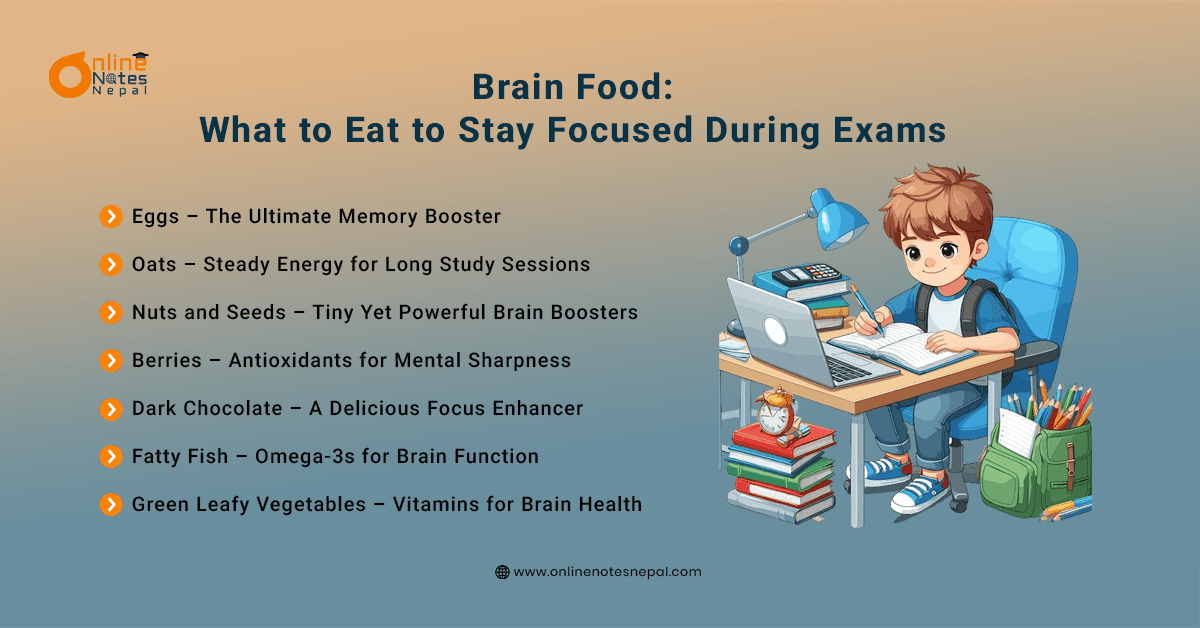
Brain Food: What to Eat to Stay Focused During Exams
Nutrition and healthIntroduction
Exams are quite challenging. They demand hours of mental effort, focus, and stamina. While most students cram by studying long hours and revising notes, one crucial factor is often overlooked: nutrition. What you eat directly affects your brain function, memory, concentration, and overall mental energy. Eating the right foods can give one an edge in exam performance, while poor nutrition could result in fatigue, distraction, and a poor performance.
Within this article, we will explore the best brain foods, which nutrients to focus on, and how to practically fuel your mind for optimal performance.
1. Eggs: The Ultimate Memory Booster
Eggs are not just breakfast staples; they are brain powerhouses. They are rich in choline, a nutrient that supports memory and learning, and also contain protein which fuels the brain. Choline helps in the production of acetylcholine, a neurotransmitter essential for memory and alertness.
How to include eggs in your diet:
Eat boiled or scrambled eggs for breakfast.
Combine with whole-grain toast for sustained energy.
Make an egg salad or omelet with vegetables for lunch.
Studies have shown that regular intake of choline-rich foods like eggs can enhance memory recall, making them ideal for students during exam preparation.
2. Oats – Steady Energy for Long Study Sessions
Oats are a complex carbohydrate, which means they release energy slowly into the bloodstream. This keeps your energy levels steady, avoiding sugar spikes and crashes that can affect concentration. Oats also contain vitamin B, which supports brain function.
Ways to consume oats:
Make oatmeal with milk, fruits, and a sprinkle of nuts for breakfast.
Add oats to smoothies for a quick energy boost.
Avoid instant sugary oat packets; choose plain oats for maximum benefit.
Eating oats before a study session or exam ensures your brain stays active and your focus is sustained over long periods.
3. Nuts and Seeds Tiny Yet Powerful Brain Boosters
Nuts like almonds, walnuts, cashews, and seeds like flaxseeds, pumpkin seeds, and chia seeds are packed with omega-3 fatty acids, vitamin E, and protein. These nutrients enhance brain cell health, improve memory, and reduce cognitive decline.
How to snack smartly:
Eat a small handful of nuts between study sessions.
Mix seeds into yogurt, salads, or oatmeal.
Avoid heavily salted or sugar-coated nuts to prevent energy crashes.
Regular consumption of these tiny powerhouses can significantly improve focus and alertness during exams.
4. Berries Antioxidants for Mental Sharpness
Berries such as blueberries, strawberries, blackberries, and raspberries are rich in antioxidants like flavonoids, which fight inflammation in the brain and improve memory. Studies suggest that regular berry consumption can enhance learning ability and memory retention, both critical during exam preparation.
Ways to eat berries:
Add to breakfast cereals or oatmeal.
Blend into smoothies with yogurt and nuts.
Snack on frozen berries when fresh ones aren’t available.
Including berries in your daily diet can improve both short-term focus and long-term brain health.
5. Dark Chocolate A Delicious Focus Enhancer
Dark chocolate is more than a sweet treat. It contains flavonoids, caffeine, and antioxidants that improve blood flow to the brain, enhancing memory, mood, and mental alertness.
Tips for using dark chocolate wisely:
Choose chocolate with at least 70% cocoa content.
Limit portion size to a small piece to avoid sugar crashes.
Pair with nuts for a nutrient-rich snack.
Eating a small piece of dark chocolate before study sessions can boost concentration and motivation, making it a perfect exam-day snack.
6. Fatty Fish Omega-3s for Brain Function
Fatty fish like salmon, mackerel, sardines, and trout are rich in omega-3 fatty acids, essential for cognitive function. Omega-3s support neuron communication, improve memory, and reduce mental fatigue.
Incorporate fish into your diet:
Eat grilled or baked salmon for lunch or dinner.
Use sardines or mackerel in salads or sandwiches.
If fish is unavailable, omega-3 supplements can be considered after consulting a healthcare professional.
Regular intake of omega-3-rich foods is associated with better memory retention, sharper focus, and reduced stress.
7. Green Leafy Vegetables – Vitamins for Brain Health
Vegetables like spinach, kale, broccoli, and Swiss chard are loaded with vitamins A, C, E, and K, folate, and antioxidants. These nutrients enhance brain function, protect against oxidative stress, and improve learning abilities.
Practical ways to include them:
Add spinach or kale to sandwiches and wraps.
Include broccoli in meals or as a light snack with hummus.
Blend leafy greens into smoothies for a quick nutrient boost.
Eating leafy greens regularly supports long-term brain health and helps maintain alertness during long study hours.
8. Whole Grains Keep Energy Levels Stable
Whole grains like brown rice, quinoa, whole wheat, and barley provide complex carbohydrates for slow and steady energy release. Unlike refined carbs, they prevent sudden spikes in blood sugar, which can cause fatigue and distract you from studying.
Tips to include whole grains:
Make brown rice or quinoa your base for lunch or dinner.
Use whole wheat bread for sandwiches.
Pair with proteins like eggs or lean meat for a balanced meal.
Consuming whole grains keeps your brain alert and focused, especially during morning study sessions or back-to-back exams.
9. Yogurt and Fermented Foods Gut-Brain Connection
Yogurt, kefir, and other fermented foods contain probiotics that support gut health. A healthy gut is linked to better brain function, improved mood, and reduced stress.
How to use them:
Eat plain yogurt with fruits or seeds as a snack.
Include kefir in your breakfast smoothie.
Avoid heavily sweetened varieties to prevent energy crashes.
A healthy gut ensures steady energy and mental clarity, which is especially important during exam season.
10. Water – The Essential Brain Fuel
Hydration is critical for concentration and cognitive performance. Even mild dehydration can reduce attention, memory, and alertness.
Tips for staying hydrated:
Drink water regularly throughout the day.
Avoid excessive caffeinated drinks that may dehydrate you.
Include hydrating foods like cucumbers, watermelon, and oranges.
Keeping your brain hydrated ensures maximum efficiency, helping you stay sharp during long study sessions and exams.
Bonus Tips for Smart Eating During Exams
Eat small, frequent meals to maintain energy levels without feeling heavy.
Avoid greasy and junk food, which can make you sleepy.
Combine protein, healthy fats, and complex carbs for sustained mental energy.
Plan meals around study times to avoid hunger or fatigue.
Get enough sleep, because even the best diet cannot replace the benefits of rest.
Final Thoughts
Your brain is your most valuable tool during exams, and what you eat either fuels it or slows it down. By adding eggs, nuts, berries, dark chocolate, fish, leafy greens, whole grains, yogurt, and water into your daily routine, you give your mind the nutrients it needs to stay focused, alert, and energized.
Remember, nutrition works best as a habit; it is not just about eating well on exam day. Building consistent brain-friendly eating habits ensures long-term mental clarity, better learning, and improved performance.
So plan your meals in advance, pack healthy snacks for studying, and fuel your brain smart. And when the exam day does arrive, you'll be prepared to think quicker, remember more, and maintain focus longer.
Sponsored: